
August 14, 2026
The Gift of Time
I missed my grandmother. She lived in Chile, a world away, and I was too young to do much of anything about it, let alone give money. But I realized I had something to offer: my time. So I started volunteering at Baycrest, a home for older adults in Toronto, sitting with residents who were lonely, isolated and feeling helpless. I couldn’t be with my grandmother, but I could be with them. I stayed part of the Baycrest community, sharing my time and whatever expertise I had, until I moved to the United States.
It’s why I give. At its core, I want to lift people up and ease their isolation. I feel a responsibility that comes with being human. I’m always balancing time, trust and treasure. Sometimes a gift is a simple transaction, but usually it’s a relationship.
More of us are giving time
In 2023, more than 75.7 million Americans volunteered through an organization, giving nearly 5 billion hours. That’s 28.3% of Americans age 16 and older, up from 23.2% in 2021. Even more of us help without signing up for anything: driving a friend to chemo, bringing dinner after surgery, checking on the neighbor who lives alone. We don’t always call it philanthropy, but it is.
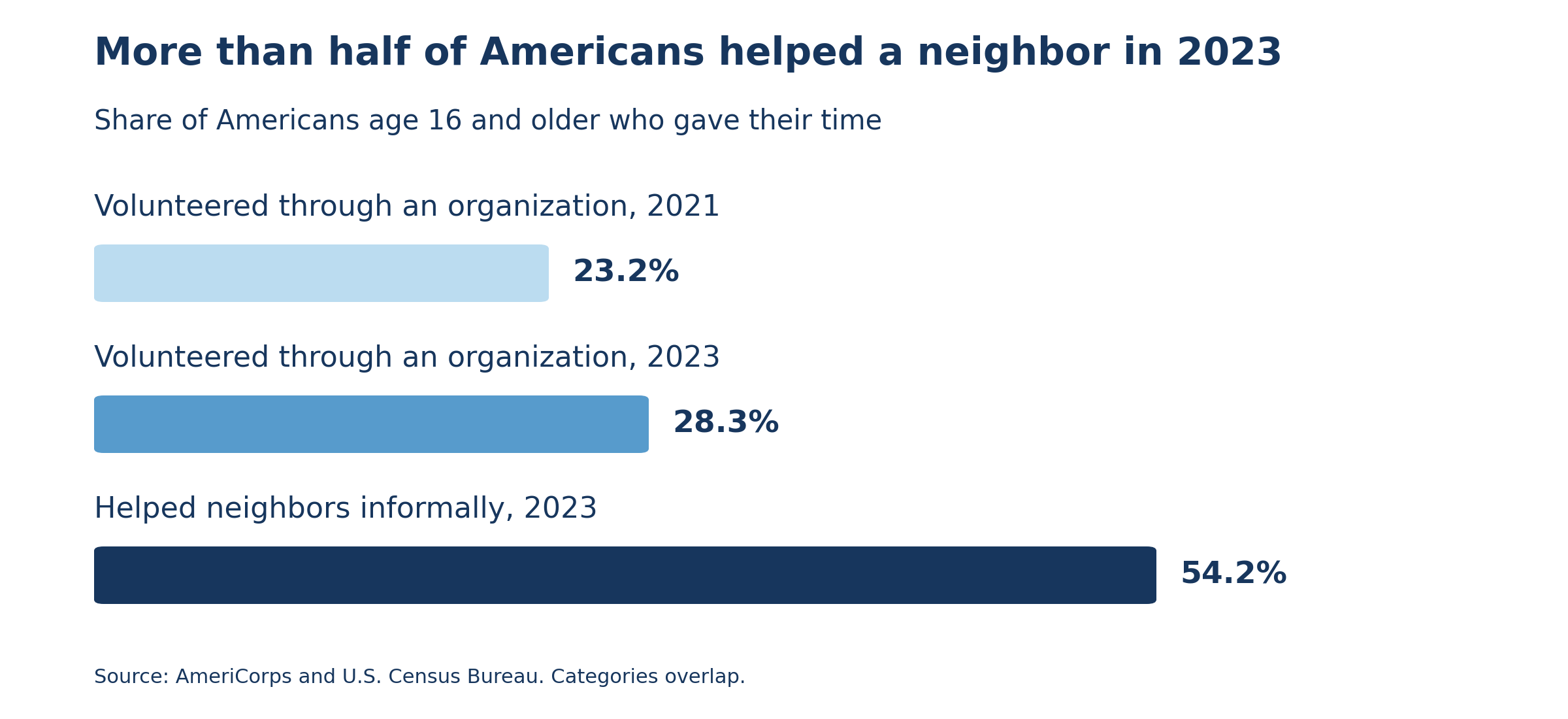
As the chart shows, informal help is nearly twice as common as formal volunteering, according to AmeriCorps and the U.S. Census Bureau. At the 2025 estimate of $36.14 an hour, all that time is worth a great deal. But volunteer time isn’t free help. It goes further when organizations invest in training, coordination and support, and that investment often depends on donors.
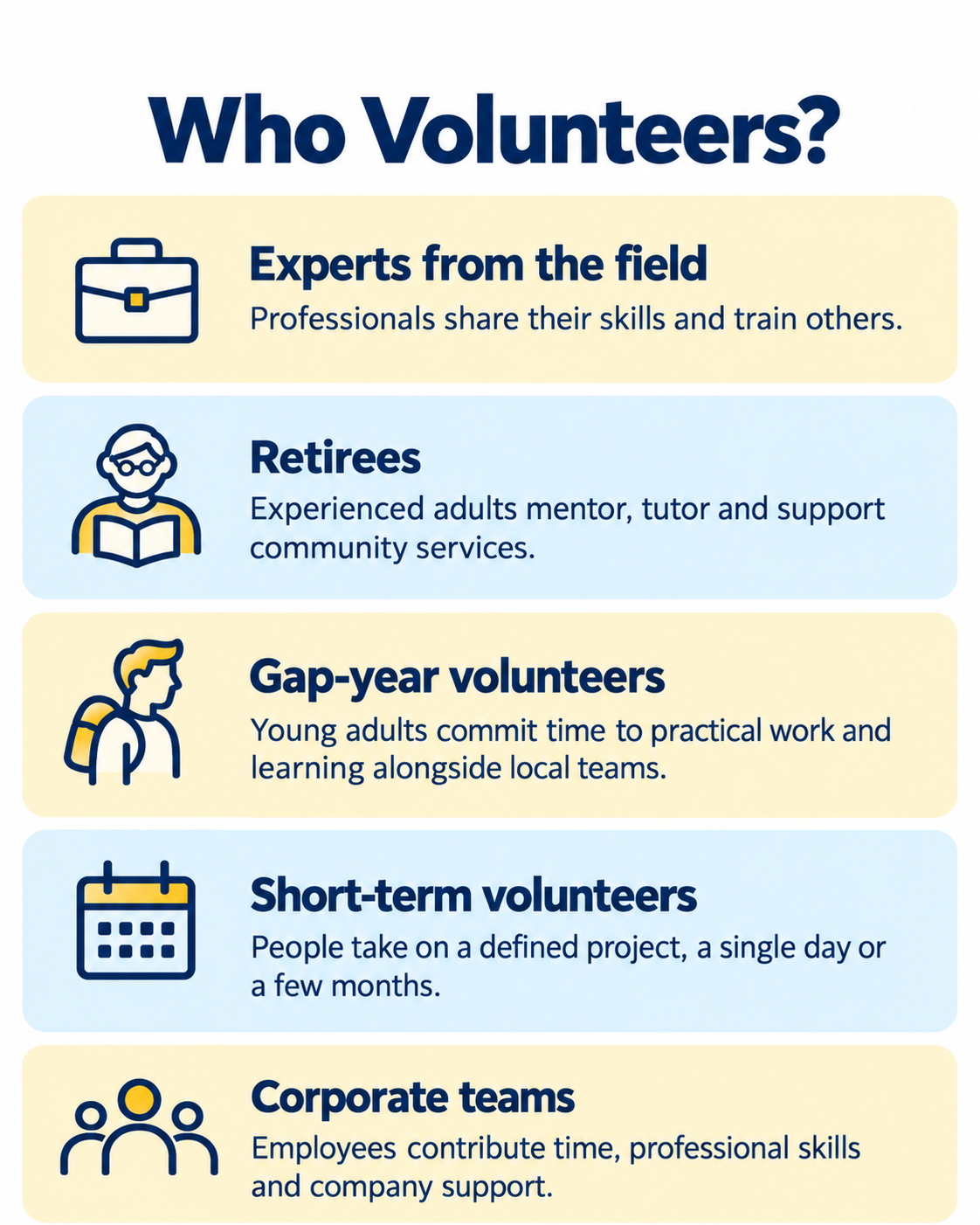
Not everyone can commit to a weekly shift for decades, the way I did at Baycrest. As the graphic shows, there’s room for many kinds of help. A few examples of each:
- Experts from the field. Health Volunteers Overseas sends qualified health professionals, usually for about two weeks, to train local health workers at the hospitals and clinics that invite them.
- Retirees. AARP Foundation’s Experience Corps trains people over 50 to tutor young children in reading. In the 2023-24 school year, 1,284 older volunteers worked with 3,659 kids.
- Gap-year volunteers. Since 2009, Princeton’s Novogratz Bridge Year has sent more than 370 incoming students on a tuition-free, nine-month service year abroad. One taught English at a YMCA in Dakar.
- Short-term volunteers. More people now prefer short, defined assignments. They do the most good when someone picks up the work when the stint ends.
- Corporate teams. LinkedIn, for example, gives $10 to a nonprofit for every hour an employee volunteers.
Whatever the role, define the arrangement clearly. Volunteering and internships can look alike: interns often serve a mission, and volunteers often learn and build résumés. What matters is that everyone knows the purpose, the responsibilities, who supervises and what each side expects.
Volunteers also need the right qualifications, supervision and permission for their role. Researchers have documented cases of volunteers abroad doing clinical work they weren’t qualified to do. A good rule: a volunteer shouldn’t do work abroad that she wouldn’t be allowed to do at home.
And especially abroad, the local organization should identify the need and shape the assignment. Useful skills alone don’t make a useful placement.
Finding them
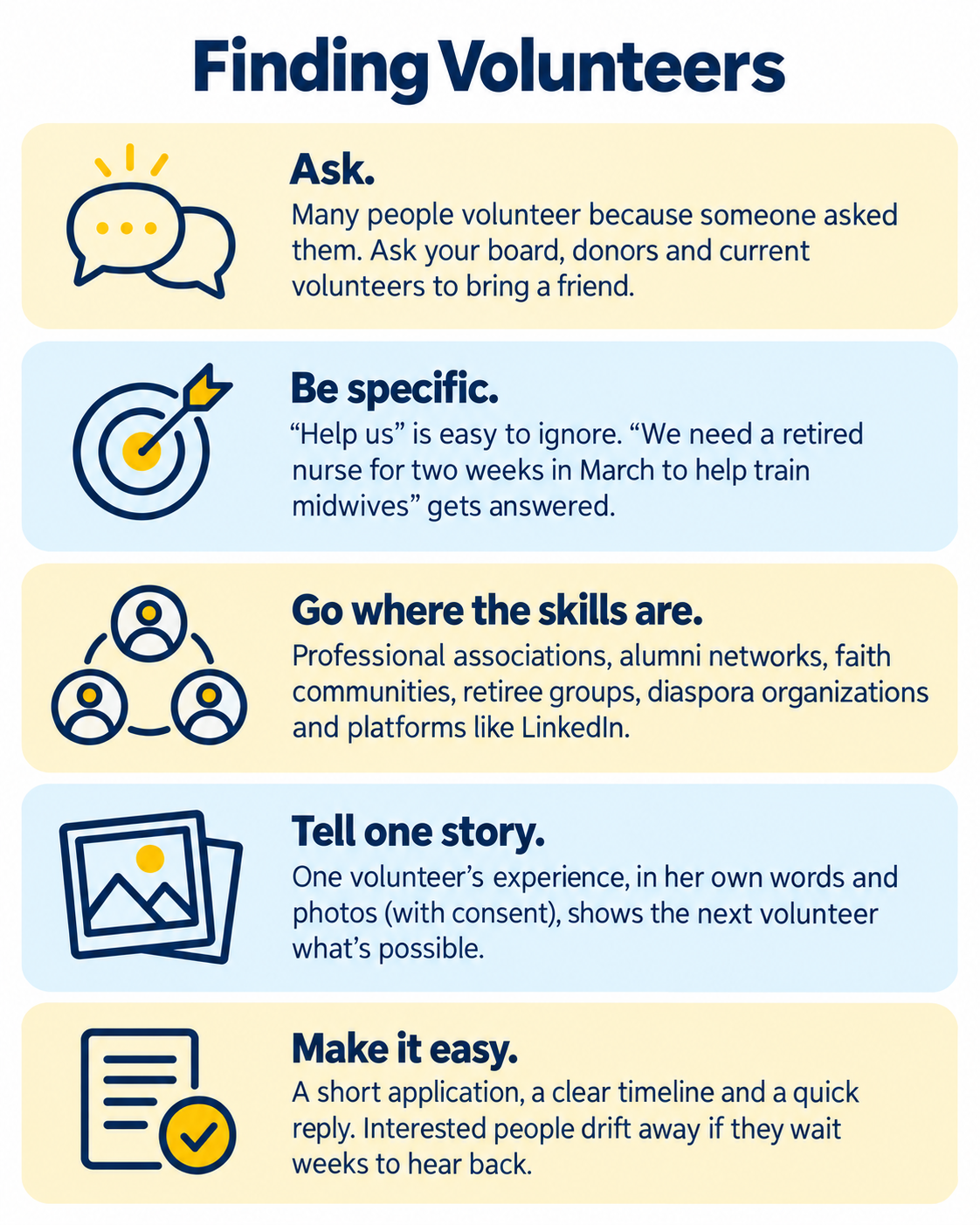
Volunteers rarely find you by accident. The organizations that recruit well market a volunteer role the way they would any other opportunity:
Keeping them
Keeping volunteers can be harder than finding them. In a 2024 survey of almost 800 volunteer managers, 43% said attracting or keeping volunteers was a major challenge. They described no-shows, people who sign up and drift away, and volunteers who finish training but never start.
As donors, we were passionate advocates of volunteering. We looked for ways our colleagues and friends could get to know our grantees. After a while, we began training our grantees to launch volunteer programs of their own. We encouraged each grantee to measure the impact of its volunteers and to ask for their feedback. Word of mouth is one of the most powerful recruiting tools, so we created an anonymous, Glassdoor-style review where volunteers could rate their experience honestly.
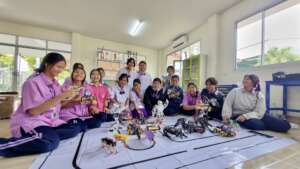
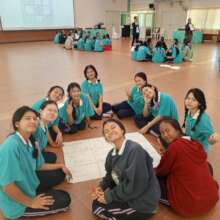
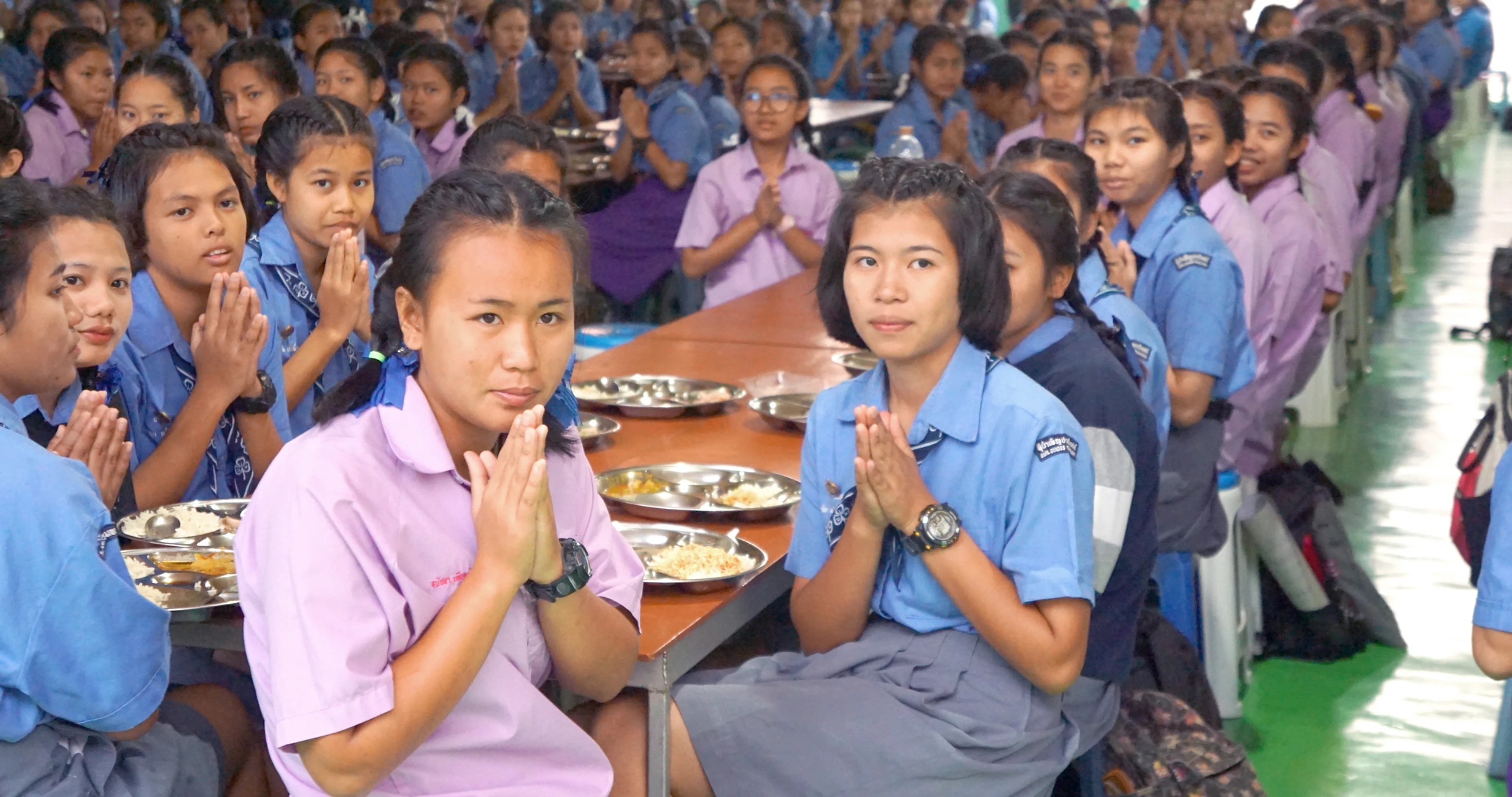
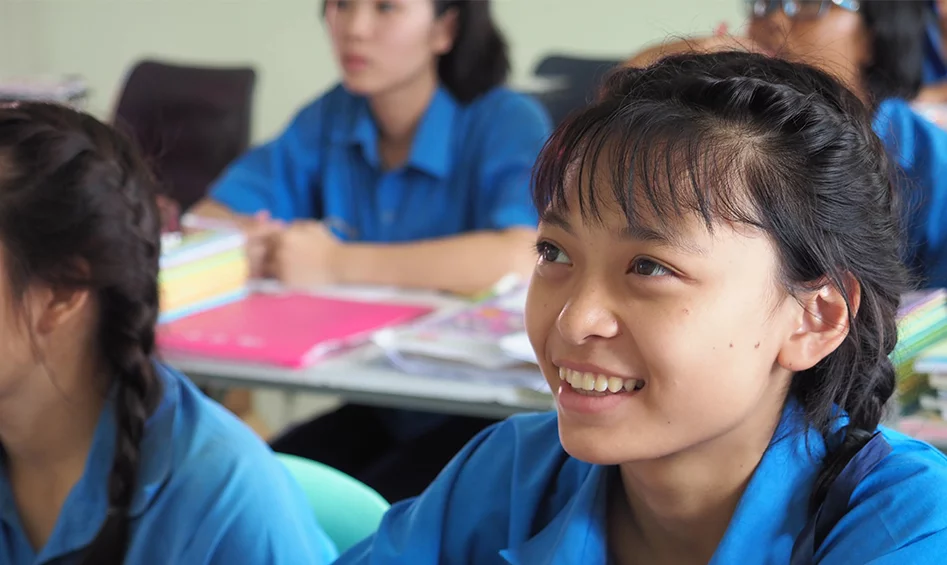
At the Dhammajarinee Witthaya School, a school and home for orphaned girls in Thailand, we recruited three kinds of volunteers, and each needed a different setup. Seniors ran the back office, marketing and the school’s global giving platform, often two hours a day, three days a week; some lived nearby and others worked from abroad. Recent college graduates came for a gap year to teach English. Experts came for defined assignments. The gap-year volunteers and experts had their own recruitment campaign, and donors covered their flights and a monthly stipend. Everyone had a weekly check-in, which included planning travel during their time off. Because the school teaches the girls Transcendental Meditation, experts were also expected to keep up their own practice, with regular check-ins from local volunteer teachers.
The girls gained practical, up-to-date skills and heard English every day. Their volunteer meditation teachers reviewed their practice and often added lessons drawn from faith. Each group of volunteers needed a different structure, but all of them needed one.
Good onboarding doesn’t have to be elaborate, and the basics are the same across town or in Thailand:
- Welcome them. Explain the mission, the rules and the people they’ll be working with, especially around children and vulnerable adults.
- Give them a real job. A clear role that draws on their experience. A short skills questionnaire helps find the fit.
- Give them a person. One staff member or experienced volunteer they can call with questions.
- Keep teaching. Training that grows with them gives people a reason to stay.
- Give them time off. Volunteers working abroad need real breaks to avoid burnout.
- Close the loop. Thank them, and show them what their time made possible.
All of this costs money. If you’re a donor, one of the most useful gifts you can make is the unglamorous one: funding a volunteer coordinator, training, screening, transport and the equipment volunteers need.


What volunteers take home
What I learned at Baycrest wasn’t complicated. Companionship matters. Being expected matters, on both sides. And showing up, week after week and year after year, is what turns a visit into a relationship. The organizations that train and support their volunteers make that kind of showing up possible.
Sources
- AmeriCorps 2023 volunteering data.
- Volunteering and Civic Life in America 2023: Headline report, AmeriCorps and U.S. Census Bureau (source for the chart).
- Value of volunteer time jumps to $36.14 per hour, Independent Sector and Do Good Institute, University of Maryland, April 2026.
- Volunteerism statistics for 2024, VolunteerPro, from its 2024 Volunteer Management Progress Report.
- What does the future of volunteering look like?, Johnson Center for Philanthropy, January 2025.
- Employee giving, LinkedIn Social Impact.
- Experience Corps research studies, AARP Foundation.
- Alumni share how Princeton’s Bridge Year program changed them, Princeton University, May 2026.
- The rise of the gap year and ethical international engagement, Stanford Social Innovation Review, May 2016.
- Volunteer FAQ, Health Volunteers Overseas.