
The Art of Donating Your Talent and Your Resources to Your Favorite Cause
How affinity donors move beyond writing checks to become catalytic partners who build lasting organizational capacity
Bottom Line Up Front
We all have a cause that stirs our hearts and compels us to roll up our sleeves. The most transformative philanthropy happens when affinity donors move beyond writing checks to become catalytic partners who build lasting organizational capacity through strategic combinations of funding, talent engagement, and hands-on involvement.
The Personal Nature of Philanthropic Passion
Every person carries within them a cause that resonates deeply—whether it’s educational equity sparked by their own struggles in school, environmental conservation inspired by childhood memories in nature, or economic mobility driven by witnessing family hardship. This personal connection, what we call “affinity investment,” represents the most powerful starting point for transformative philanthropy.
Key Insight: Nearly half of entrepreneurs consider themselves philanthropists, compared with less than a third of non-entrepreneurs. Six in 10 see giving as important relative to other financial priorities, compared with nearly half of non-entrepreneurs. This heightened engagement stems from a fundamental truth: when we give to causes we deeply understand and care about, we bring not just our wallets but our full selves to the work.
From Charity to Catalytic Impact
Organizations working on the frontlines of social change face a persistent challenge: they excel at delivering programs but often lack the infrastructure to scale their impact. This is where affinity donors can make their greatest contribution—by building the underlying capacity that enables organizations to multiply their effectiveness.
This evolution reflects a broader shift in the sector. SSIR has encouraged philanthropists to think more like investors, focusing on returns in terms of social impact. This shift requires a more analytical approach, with careful consideration of metrics and outcomes.
The Capacity Building Imperative
Organizations working on the frontlines of social change face a persistent challenge: they excel at delivering programs but often lack the infrastructure to scale their impact. This is where affinity donors can make their greatest contribution—by building the underlying capacity that enables organizations to multiply their effectiveness.
Capacity building encompasses several critical dimensions:
Organizational Infrastructure
Helping organizations develop robust systems for financial management, data collection, strategic planning, and performance measurement. This foundation enables them to attract additional funding and scale operations responsibly.
Human Capital Development
Investing in staff training, leadership development, and retention strategies. Pro bono builds capacity by reducing the time between an organization identifying a need and having it solved, as demonstrated by Capital One’s approach to social impact volunteerism.
Technology and Digital Capacity
In our increasingly digital world, organizations need technological infrastructure to operate efficiently and reach beneficiaries effectively. Philanthropy can prioritize grants for under-resourced organizations to implement AI solutions that address their specific challenges. This includes not just purchasing tools but also covering costs for training, maintenance, and capacity building.
Network and Partnership Development
Helping organizations build strategic relationships with other nonprofits, government agencies, and private sector partners to amplify their impact.
The Digital Literacy and AI Revolution
The integration of digital literacy and artificial intelligence into philanthropic strategy represents a transformative opportunity for capacity building. AI-powered analytics can help grantmakers make more data-driven, equitable funding decisions. From identifying funding gaps to predicting social impact, AI offers new ways to optimize resource allocation.
For affinity donors, this means several practical opportunities:
1. AI-Enhanced Decision Making
Use technology to better understand community needs, track program effectiveness, and identify the most promising intervention points. By leveraging machine learning algorithms, generative AI can learn from past data to identify patterns, trends, and characteristics that are likely to lead to successful projects.
2. Digital Capacity Building
Fund organizations’ adoption of digital tools while ensuring they have the training and support needed to use them effectively. The framework emphasizes the responsibility of philanthropic organizations to ensure that the usage of AI enables human flourishing, minimizes risk, and maximizes benefit.
3. Bridging the Digital Divide
Address inequality in access to digital tools and literacy, particularly for grassroots organizations serving marginalized communities. Nonprofits led by members of historically marginalized communities often face greater barriers to accessing and implementing AI tools.
Entrepreneurial Approaches to Giving
Entrepreneurial philanthropy brings business principles to social change work, emphasizing innovation, risk-taking, and measurable results. Entrepreneurs’ approach to philanthropy reflects the hands-on approach they have used in building their businesses; they place more emphasis on being personally involved in giving, deciding how funds are used, and the ability to demonstrate leadership through their volunteering.
This approach manifests in several ways:
Results-Oriented Funding
Rather than simply funding programs, entrepreneurial philanthropists invest in outcomes. They work with organizations to define clear metrics and hold themselves accountable for achieving specific results.
Innovation and Experimentation
Philanthropreneurship marks the transition from a grant and donation model to a profit model with predefined objectives and constant focus on quantifiable results. This includes funding pilot programs, testing new approaches, and scaling what works.
Cross-Sector Collaboration
Bringing together diverse stakeholders—nonprofits, businesses, government agencies—to tackle complex problems that no single sector can solve alone.
Grassroots Innovation and Local Solutions
The most sustainable social change often emerges from communities themselves. Grassroots innovations emerge when existing systems and practices fail to serve people’s needs. They can arise through serendipity, systematic experimentation, trial and error, or combining solutions in new ways.
Affinity donors can support grassroots capacity by:
Recognizing Local Expertise
Poor people are not at the bottom of the knowledge, ethical, or innovation pyramids. Unless we build on the resources in which poor people are rich, the development process will not be dignified and a mutually respectful and learning culture will not be reinforced in society.
Investing in Community Leadership
Rather than imposing external solutions, support the development of local leaders who understand their communities’ needs and contexts.
Funding Adaptation and Iteration
Support organizations in adapting proven models to local contexts, recognizing that effective solutions often require local customization.
The Talent Engagement Strategy
Beyond financial contributions, affinity donors can leverage their professional skills and networks to build organizational capacity. This “talent philanthropy” takes several forms:
Skills-Based Volunteering
Offering professional expertise in areas like strategic planning, marketing, technology, or financial management.
Example: Capital One Pro Bono connects talented associates with nonprofits, startups, small businesses and community development financial institutions (CDFIs) to help build organizational capacity and drive social change in communities.
Board Engagement
Serving on nonprofit boards or advisory committees, bringing strategic oversight and professional networks to support organizational growth.
Mentorship and Coaching
Providing ongoing guidance to nonprofit leaders, particularly in areas where donors have deep expertise.
Network Facilitation
Being involved in philanthropic causes helps introduce you to other successful entrepreneurs, making your network more powerful.
High-level business owners are often more open to networking with those that share their same passion and involvement when it comes to philanthropy.
Visitation and Relationship Building
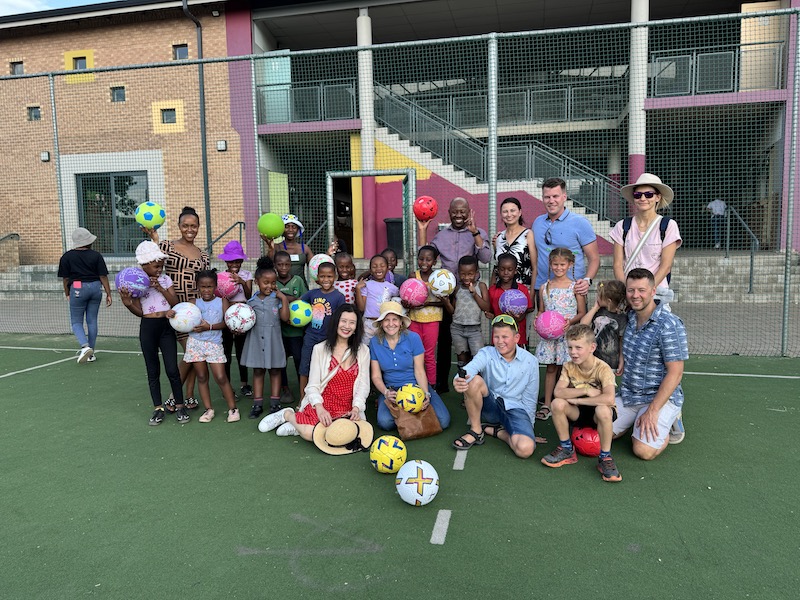
The physical act of visiting organizations and communities creates transformative relationships that enhance both giving effectiveness and personal understanding. Regular site visits and community engagement serve multiple purposes:
Deepening Understanding
Seeing programs in action helps donors understand challenges and opportunities that aren’t visible in reports or presentations.
Identifying Capacity Needs
Direct observation often reveals operational needs and opportunities that organizations might not think to include in funding requests.
Building Trust
Regular presence demonstrates commitment beyond financial contributions and helps build the trust necessary for effective partnerships.
Facilitating Learning
Site visits create opportunities for peer learning, where donors can share insights and best practices across their portfolio of supported organizations.
Scaling for Exponential Impact
The ultimate goal of capacity building is to enable organizations to scale their impact exponentially. This requires several strategic considerations:
Systems Thinking
We understand that social change requires systems change. Rather than funding isolated programs, focus on interventions that can shift broader systems and structures.
Collective Impact
Support initiatives that bring together multiple organizations working on related issues, recognizing that lasting change requires collaboration across different sectors.
Policy and Advocacy
Fund organizations’ capacity to engage in policy advocacy, recognizing that sustainable change often requires shifts in laws, regulations, and government policies.
Knowledge Sharing
Support the documentation and dissemination of effective practices, enabling successful models to spread to new contexts and organizations.
Practical Framework for Affinity Donors
Based on insights from SSIR, FSG, and leading practitioners, here’s a practical framework for affinity donors seeking to build capacity:
1. Start with Deep Listening
Before making any commitments, spend time understanding the ecosystem around your issue area. Who are the key players? What are the biggest capacity gaps? Where can your unique combination of resources and expertise make the greatest difference?
2. Invest in Relationships
Thoughtful engagement on a personal level is often the first step to effective giving and investing. Build genuine partnerships with organization leaders, taking time to understand their vision, challenges, and capacity needs.
3. Think Beyond the Grant
Consider how you can contribute skills, networks, and ongoing support alongside financial resources. What professional expertise can you share? Which connections might benefit your partners?
4. Think Beyond the Grant
Consider how you can contribute skills, networks, and ongoing support alongside financial resources. What professional expertise can you share? Which connections might benefit your partners?
The Ripple Effect of Strategic Giving
When affinity donors approach philanthropy strategically, the impact extends far beyond individual organizations. By engaging in philanthropic activities, you’ll find yourself part of a community that’s not just focused on financial gain but on making the world a better place. These relationships can lead to new ventures, partnerships and insights that you might never encounter in traditional business circles.
This community of practice creates multiplier effects:
Organizations share best practices and collaborate more effectively
Donors learn from each other and refine their giving strategies
Successful models attract additional resources and attention
Policy makers take notice of effective approaches and consider broader implementation
Conclusion: The Art of Transformative Giving
The art of donating to your favorite affinity investment lies not in the size of the check, but in the depth of engagement and the strategic nature of the support. When donors bring their passion, expertise, and networks to bear on causes they care deeply about, they create the conditions for transformative change.
Philanthropy is about more than money — it’s about the impact you leave behind. Building a legacy through giving ensures that your success benefits not only you but also future generations.
The most effective affinity donors understand that building grassroots capacity requires patient capital, ongoing relationships, and a willingness to share power with community leaders. They embrace technology and innovation while remaining grounded in the fundamental truth that lasting social change happens through people, in communities, one relationship at a time.
As we face increasingly complex global challenges, from climate change to inequality to technological disruption, the need for this kind of strategic, catalytic philanthropy has never been greater. The question is not whether you have a cause that calls to you—we all do. The question is whether you’re ready to answer that call with the full measure of your resources, relationships, and commitment to building a more just and equitable world.
The future of philanthropy belongs to those who understand that the greatest gift they can give is not just their wealth, but their authentic engagement in building the capacity of others to create lasting change.