
April 10, 2023
Building an Endowment Without Sacrificing Today’s Mission
An international orphanage I’ve supported through a foundation for several years recently asked me to investigate creating an endowment.
The foundation already supports educational programming, and we want that relationship to continue. But we’re thinking about something larger: How can we help protect the orphanage’s future while encouraging other donors to support new opportunities for the children?
We’re both excited about the possibilities. We haven’t settled on the answer, and there is a great deal to work through.
We’re learning together.
The process is raising questions that every nonprofit executive and board should consider before creating an endowment.
Decide what must endure
Today, a donor might help establish a digital learning lab or purchase computers. Five years from now, that technology may need replacing. Twenty years from now, the girls may be learning with tools we can’t even imagine.
Programs will change. They need to be flexible enough to respond to the girls’ interests, abilities and opportunities.
But the children will always need nutritious meals, medical care and a safe environment in which to grow and learn.
That’s the distinction helping us think about the endowment’s purpose.
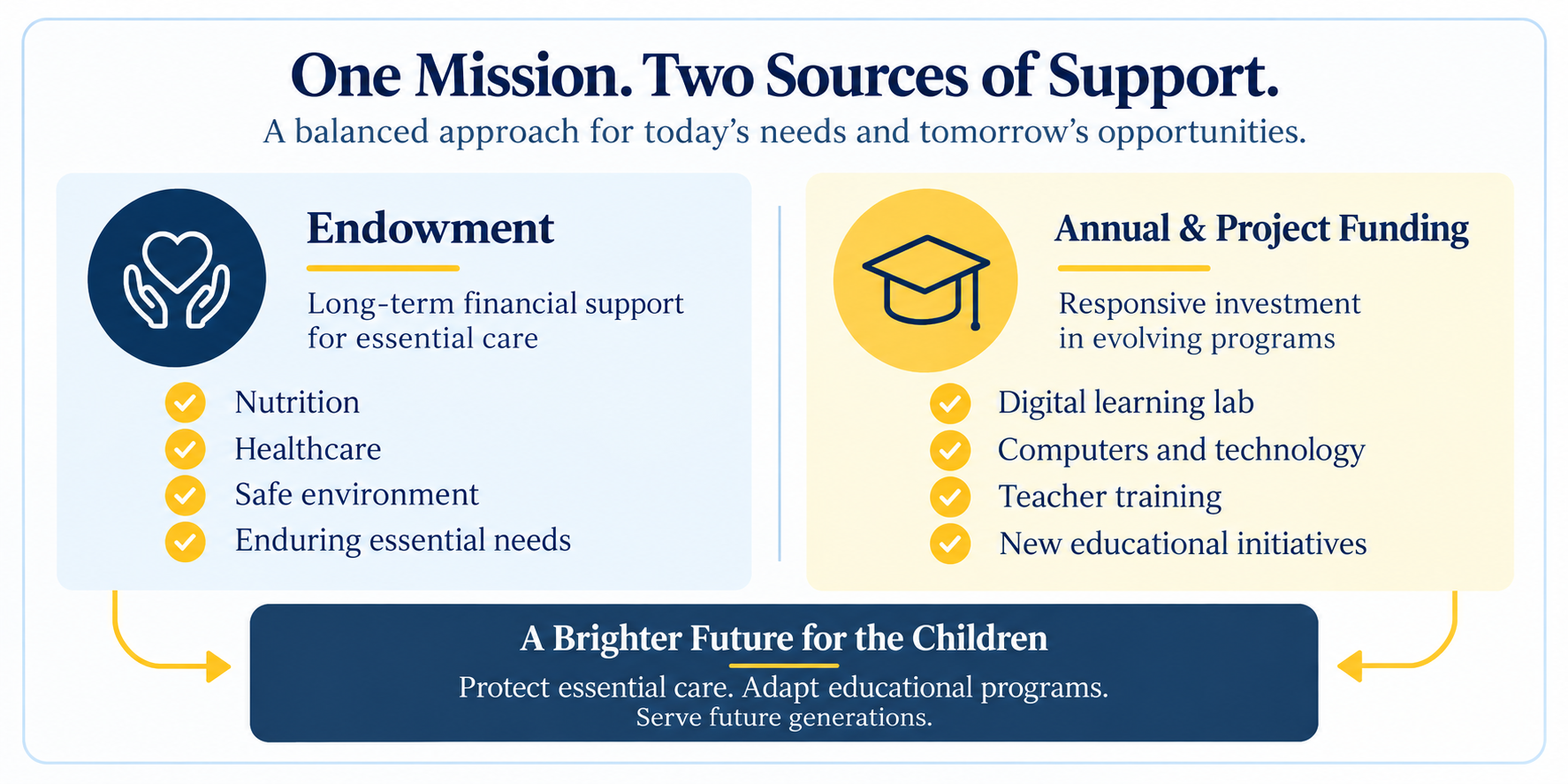
Our goal is to establish a source of long-term financial support for those essential needs while continuing to invite donors to fund educational programs and new opportunities.
The endowment would contribute to financial stability. Other donors could continue supporting the programs that help the girls learn, develop confidence and prepare for their futures.
The goal isn’t to replace fundraising. It’s to give fundraising a stronger foundation.
Build patiently, spend carefully
We’re considering a five-year period to build the endowment’s capital, with the intention of preserving the original contributions rather than drawing them down for operating expenses.
That requires more thought than choosing an investment manager and setting a fundraising target.
We started asking practical questions. What does it cost to provide nutritious meals and medical care each year? How much of that expense could reasonably be covered by investment returns? What happens when markets decline? How do fees affect the amount available to the orphanage?
We also need to consider inflation. Preserving the original amount invested doesn’t necessarily mean the fund will be able to purchase the same goods and services twenty years from now.
And if we’re building the capital over five years, we need to be realistic about when distributions could begin and how operating expenses will be covered in the meantime.
These are important decisions because an endowment should strengthen the organization’s finances, not create another set of commitments it cannot meet.
Choose the structure, guidance and cost
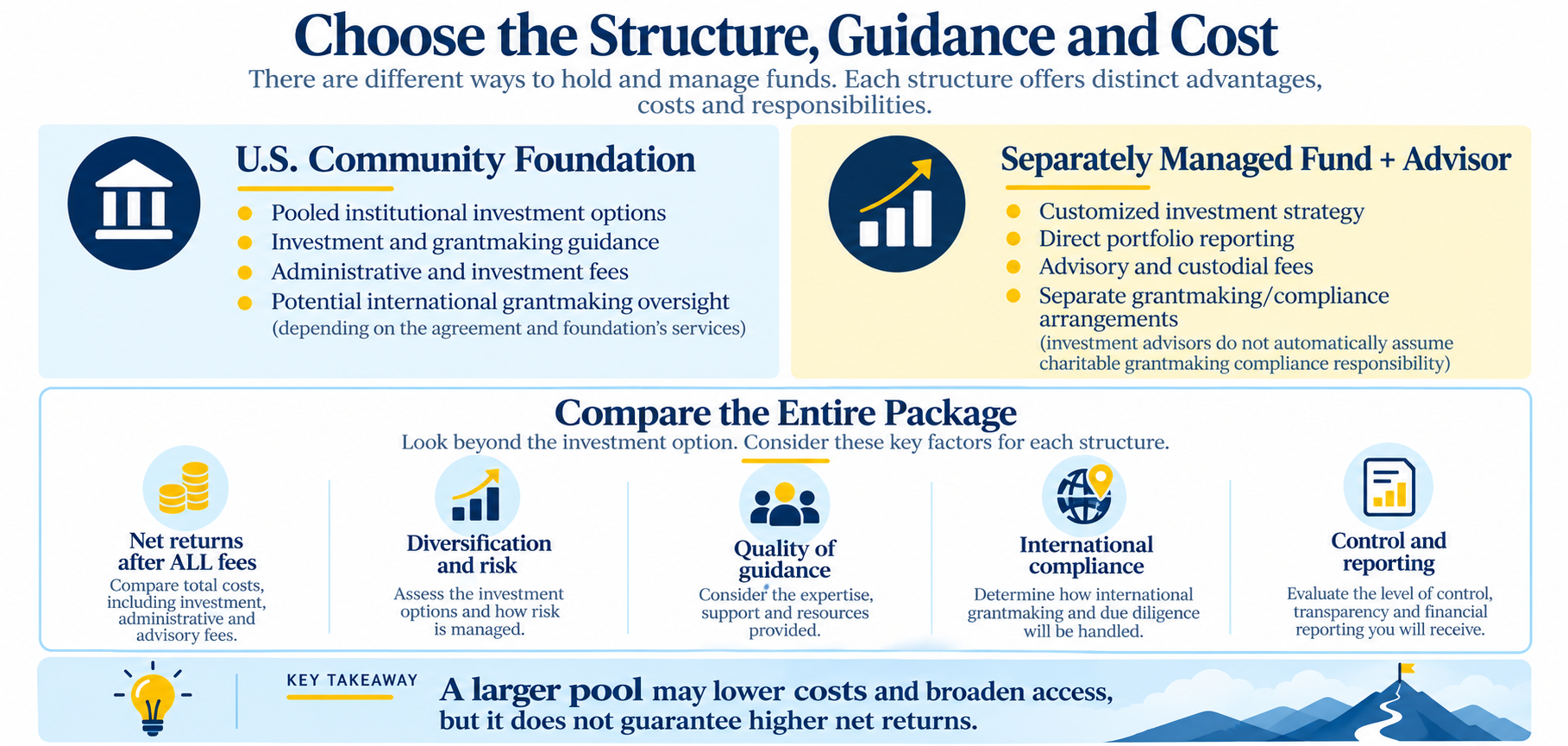
Because the orphanage operates internationally, we’re examining two possible approaches: establishing a fund through a U.S. community foundation or holding the assets separately with a U.S. investment advisor.
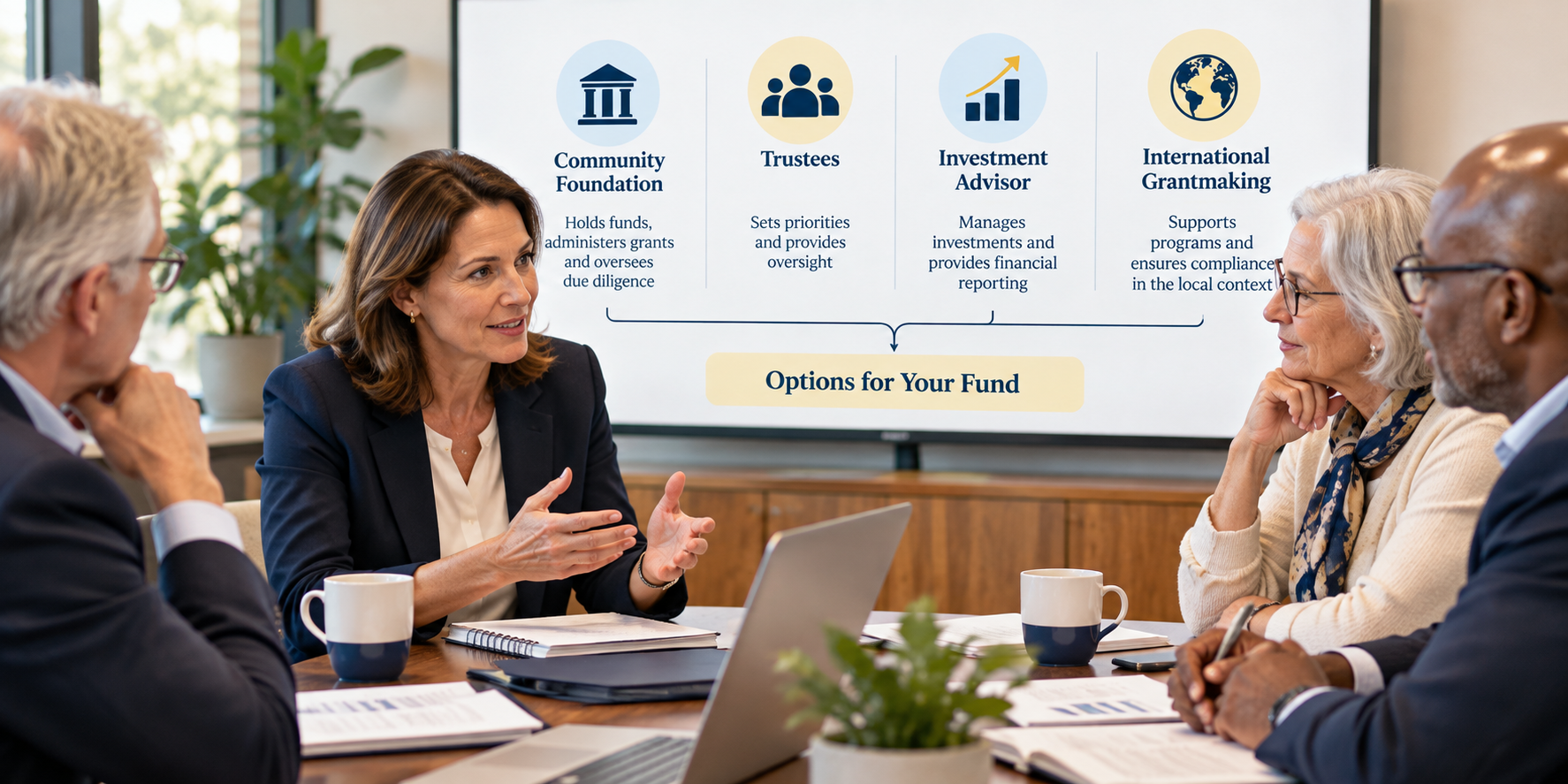
Initially, much of our attention was on accountability. Who would hold the funds? Who would oversee distributions? Who would be responsible for international grantmaking compliance?
But the questions quickly expanded.
We also need to understand what we’re paying for, what guidance we’ll receive and which structure offers the best opportunity to preserve and grow the fund.
A community foundation may allow us to participate in a larger investment pool with professional management, established governance and administrative support. There may be advantages to investing alongside a much larger endowment, including greater diversification and access to institutional investment managers.
But we need to understand the fees. Community foundations may charge for investment management, administration and grantmaking services. Those expenses affect how much funding will ultimately be available for the children.
Working directly with an investment advisor could give us more control over the portfolio and a direct reporting relationship. But we’d also need to consider custodial fees, accounting, administration and the additional arrangements required for international grantmaking.
Would a larger pooled fund produce better returns after expenses? Possibly. But we’d need to compare investment performance, risk, total fees and the services provided before reaching that conclusion.
The quality of guidance matters, too. We want an institution or advisor who can help us think through spending policies, inflation, reporting and the long-term responsibilities of managing an endowment.
We’re comparing the full arrangements, not simply the investment management fees.
Roll up our sleeves together
One of the questions we’re especially interested in is whether the orphanage could meet the requirements of a U.S. community foundation.
That isn’t something we can determine from an investment proposal.
A community foundation considering grants to an international organization may need detailed financial statements, evidence of sound governance, operating procedures, internal controls and reliable reporting.
We need to know what the requirements are, which ones the orphanage already meets and where additional work may be necessary.
As the principal operating funder, we’re not interested in handing over a checklist and leaving the orphanage to figure it out.
We’re working through the questions together.
That means reviewing financial information, understanding how local corporate donations are recorded, examining operating costs and considering what additional reporting or oversight might be required.
Some changes may be relatively straightforward. Others could require new systems or additional staff capacity.
We’re also interested in the guidance a community foundation would provide during this process. Would it help the orphanage prepare? What would it expect from the organization’s leadership? Which responsibilities would remain with the grantee, and which would fall to the institution administering the funds?
These are questions we’re still exploring.
What makes the process encouraging is that the orphanage’s leadership is just as interested in learning what is required. We’re beginning to see how the work of preparing for an endowment could also strengthen its financial management and relationships with other funders.
Even if we ultimately choose a different structure, the knowledge and improvements developed along the way will have value.
Let other donors fund what comes next
Initially, we were concerned that creating an endowment might discourage donors from supporting current programs. If the orphanage had a permanent source of funding, would other supporters feel their contributions were no longer needed?
As we worked through the model, we realized that the two could complement each other.
The endowment would help cover essential needs that don’t go away: nutritious meals, medical care and the costs of providing a safe and stable home. Our goal is to preserve the original capital and use a portion of investment returns to support these recurring expenses.
That leaves plenty of room for other donors to fund programs and new opportunities.
A technology company might match funding to establish a digital learning lab. Another donor could provide computers or software. A family foundation might support teacher training, while local businesses could sponsor special events or vocational programs.
Five years from now, the computers may need replacing. The girls may have different educational interests, and new opportunities may emerge through local universities and employers. These are initiatives that give donors a reason to become involved and stay engaged.
We also recognized the importance of how the endowment agreement is written. Rather than restricting funding to specific supplies, meals or treatments, we want to protect the broader purpose of providing essential care. That gives the orphanage flexibility as needs change.
What reassured us was realizing that the endowment wouldn’t replace the need for other donors. It would provide a more stable foundation, allowing their contributions to create new opportunities for the girls.
Begin with the mission, not the money
The more we explore the endowment, the more interesting the work becomes.
We started with the idea of creating a reliable source of funding for essential care. That led us to questions about investment structures, fees, compliance and the financial information the orphanage would need to provide.
Now we’re looking at how the preparation itself can strengthen the organization.
There is still considerable work ahead. We haven’t chosen the final arrangement, and we need to continue testing the financial assumptions, comparing providers and understanding the requirements.
We are making progress, and the orphanage’s leadership shares our enthusiasm for what this could make possible.
For me, that’s one of the most rewarding parts of the work. We’re not simply discussing how to establish an investment fund. We’re working together to create something the organization can understand, manage and benefit from over the long term.
An endowment shouldn’t prevent an organization from changing. It should help protect the services that must continue while giving donors new opportunities to invest in the future.
We’re still working toward that goal, and we’re excited about what we’re learning along the way.