
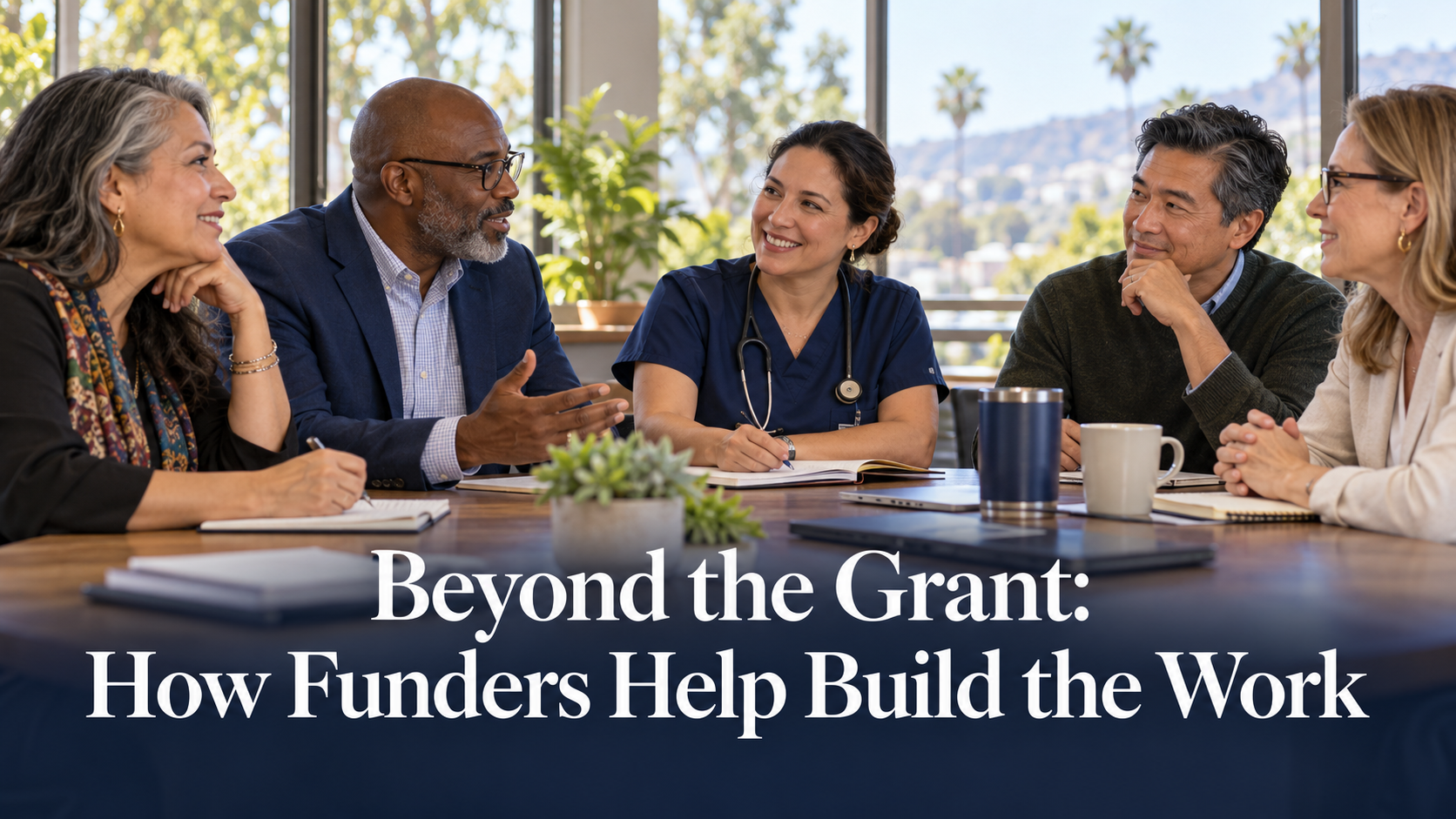
Making meditation available within a hospital or first responder organization involves more than paying for instruction. Someone needs to develop the relationship, understand staff needs, secure funding and work through how the service will operate.
In Los Angeles, our foundation’s focus on mental wellness led our team into that work. Alongside a nonprofit partner, we developed relationships, approached potential funders and helped shape programming with participating organizations.
Our contribution included the grant, but it also included outreach, advocacy and the practical work of bringing people and resources together.
For funders, this is one way to think about business development: helping build the relationships and capacity needed to advance your mission.
Develop the work together
Our partners had their own priorities and responsibilities. Hospitals cared for patients. First responder organizations supported people working under demanding conditions. Introducing meditation required understanding how it could fit within those settings.
Our team brought a commitment to mental wellness. Our nonprofit partner brought teaching expertise. Participating organizations understood their staff, schedules and workplaces.
Together, we considered where there was demand, what participation would require and how the work could support each organization’s purpose.
Co-creation meant those conversations shaped the approach. We needed to understand what partners could realistically take on and what additional support they would need.

Advocate with other donors
A funder can also help a nonprofit reach people who may be willing to support its work.
Our team’s outreach included approaching potential funders, explaining the opportunity and helping them understand how their interests connected to the collaboration.
That advocacy carries responsibility. Before making an introduction, you need to understand the work well enough to explain why it matters, what the organization needs and how another donor could contribute.
You also need agreement with your nonprofit partner about the approach. Introductions are most useful when they lead to a clear conversation about a shared opportunity.
A foundation’s relationships can become a resource for its partners when the team takes time to prepare, make the connection and follow through.
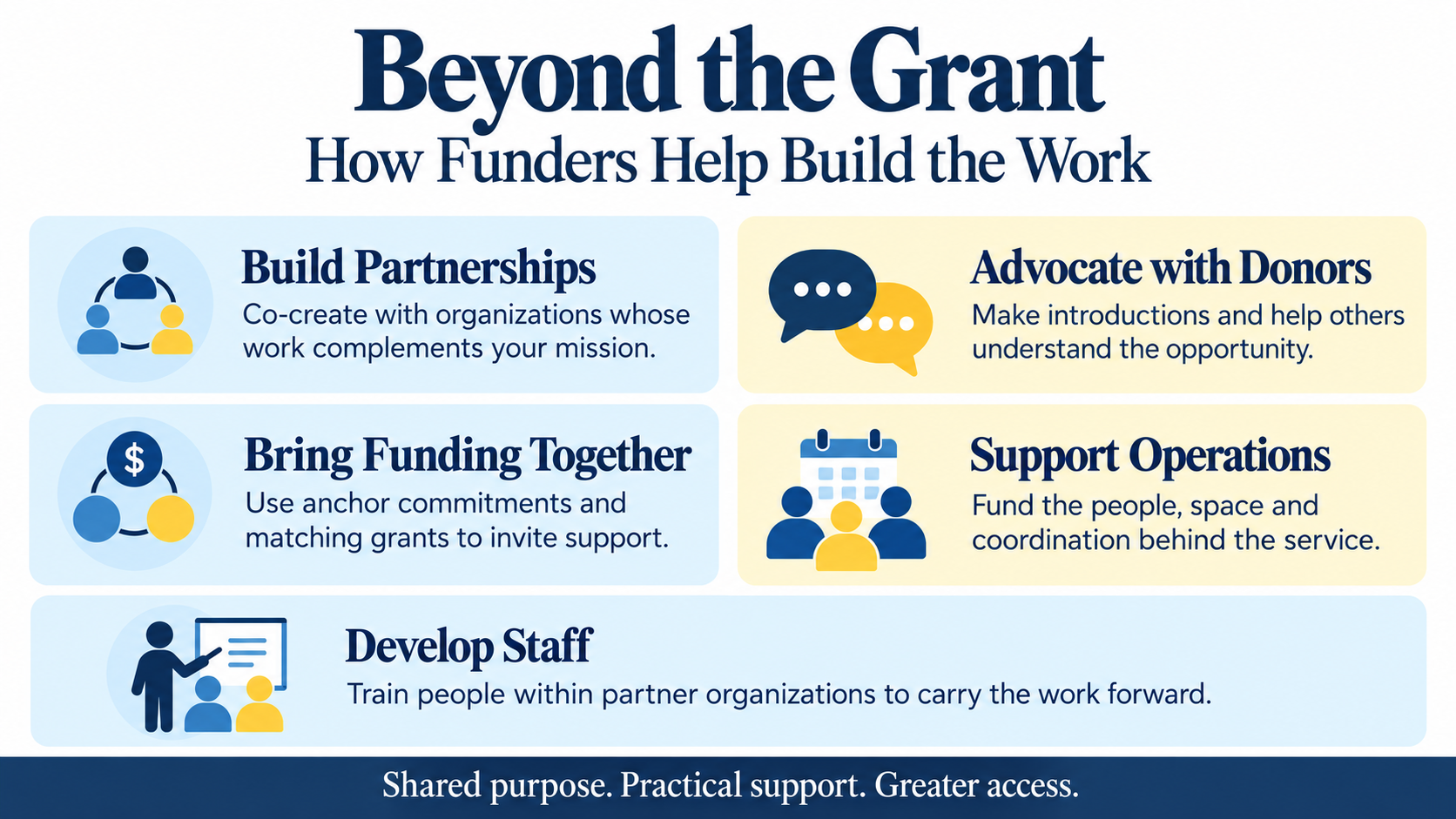
Use funding to bring others into the work
Matching and anchor commitments can help develop that shared investment.
An anchor commitment provides an initial base of support around which other funding can be assembled. A matching grant makes a contribution conditional on additional giving. Each gives a prospective donor a different reason to consider participating.
The choice should reflect what the organization needs. It may need dependable operating support before it can expand. It may have a defined opportunity that a match could help fund.
For funders, the question is how your commitment can help establish a workable funding plan. That includes being clear about what you will support, for how long and what still needs to be raised.
Support the operations behind the mission
Programming depends on people who can organize and deliver it.
Teacher salaries, staff coordination, space, scheduling and follow-up all affect whether meditation is available when people seek it. These costs need to be part of the funding conversation.
Supporting a partner’s operations can be a direct investment in your own mission. If mental wellness is your purpose, the organization providing that service needs the resources to function.
Our team’s role was to understand those requirements with our partners and help develop support around them.

Build capacity where the demand is
Staff development was another important part of the Los Angeles work.
Our team helped develop training for staff within hospitals and first responder organizations so they could teach meditation to their colleagues. This built teaching capacity within the places where people were already working and seeking support.
Those staff members understood their organizations and the pressures their colleagues faced. Developing their ability to teach gave partners a greater role in carrying the work forward.
A funder’s contribution can include opening doors, advocating with other donors, supporting operations and helping partners develop their staff. Each requires time and attention. Together, they can help turn a funding commitment into a service people can access.