March 3, 2024
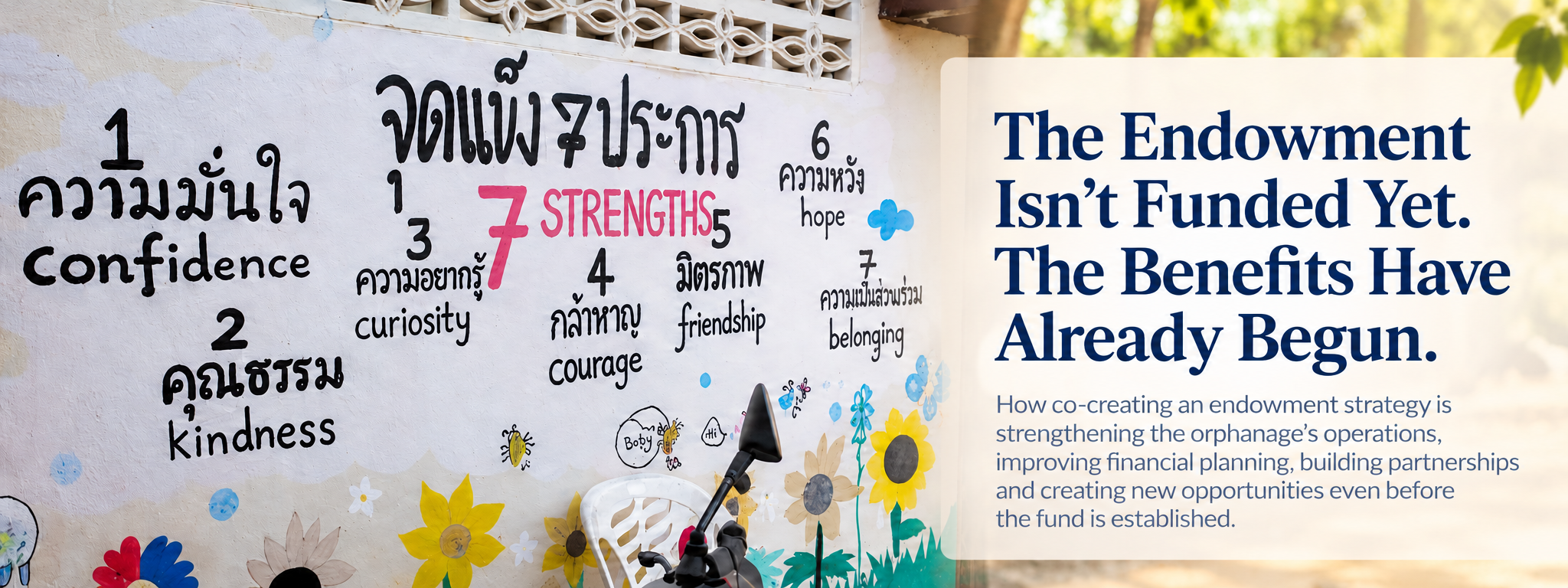
The Endowment Isn’t Funded Yet. The Benefits Have Already Begun.
As the principal operating funder of an international orphanage, our foundation has been asked to help explore creating an endowment.
We already work closely with its leadership on strategy and implementation, so we understood that this wouldn’t simply be a discussion about investments.
But the more we examined what would be required, the more work we found ahead of us.
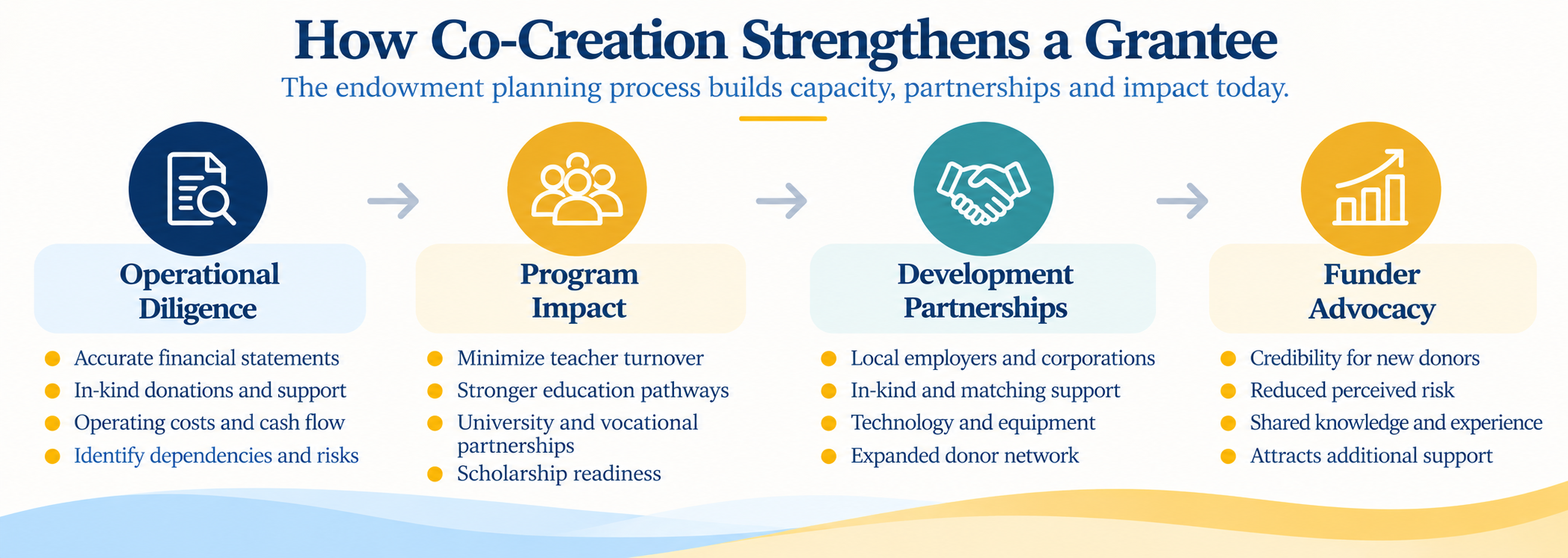
The financial reporting needed greater detail. We needed to better document the value of in-kind donations from local corporations. We had questions about teacher turnover, educational outcomes and the organization’s ability to develop relationships with other donors.
We also needed to understand whether the orphanage could meet the requirements of a U.S. community foundation if we chose that structure.
It’s an uphill journey, and we’re rolling up our sleeves together.
What has encouraged me is that the endowment is still in development, yet the work is already helping us look more closely at the organization’s operations, partnerships and long-term needs.
Co-creation begins with listening
The idea of exploring an endowment came from the orphanage’s leadership. Our role was to help determine what might be possible and what would be required.
But our relationship had already developed well beyond financial support.
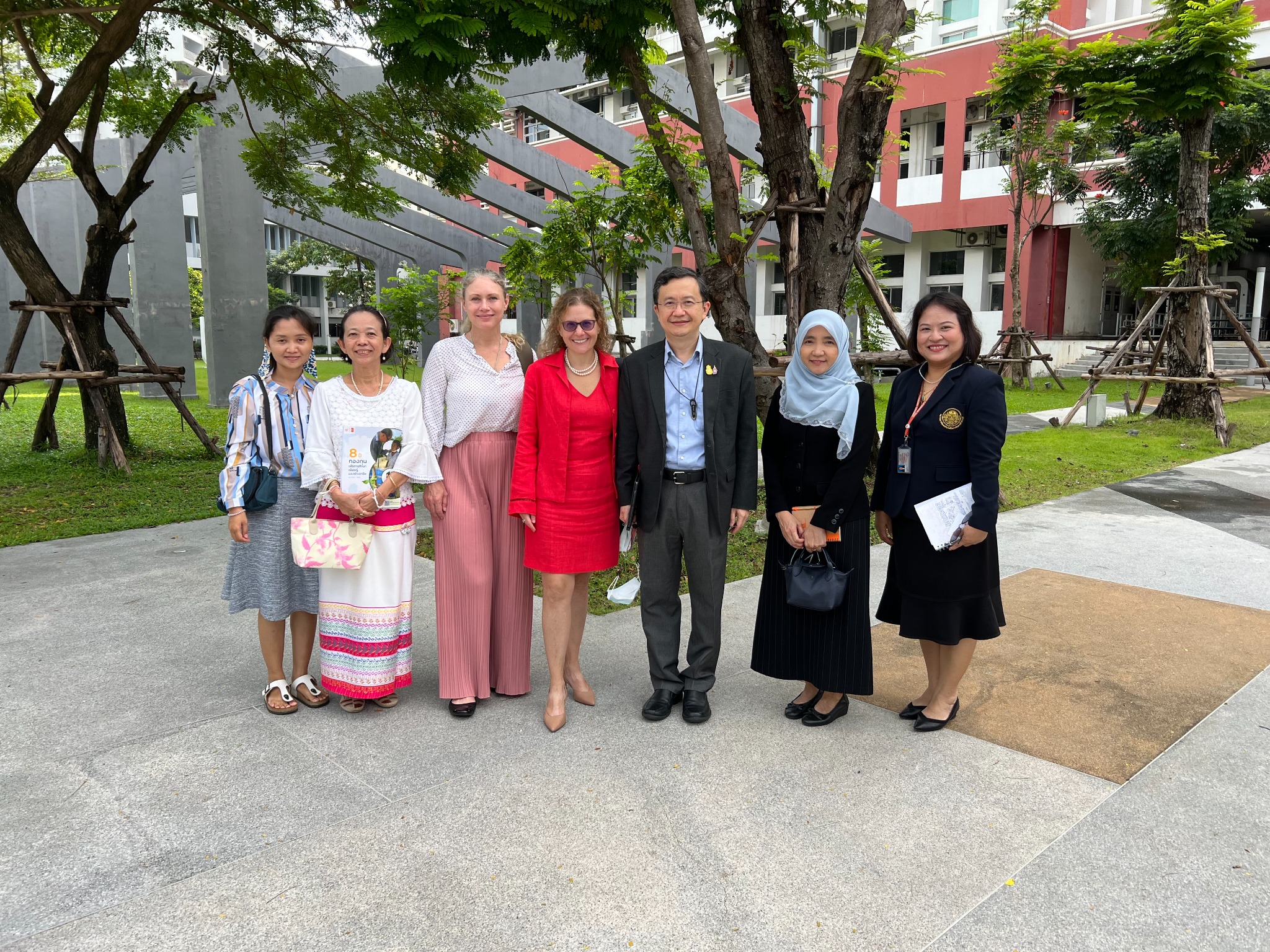
I’ve visited the orphanage several times. Its leadership encouraged us to understand where the girls came from, the experiences of their families, and the work of their caregivers, teachers, volunteers and social workers.
We learned about the relationships the organization had already built and asked which new ones it wanted our help developing.
That understanding shaped our work.
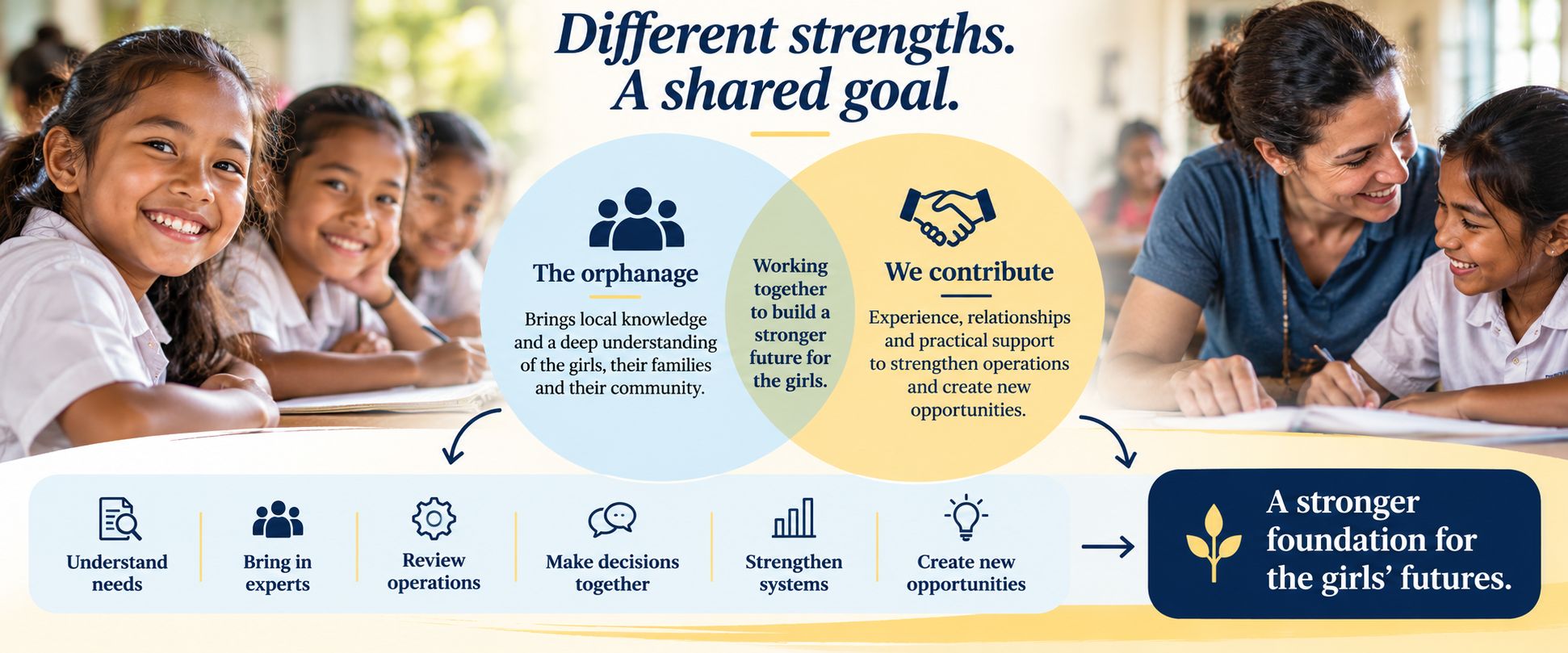
We jointly examined financial statements, reviewed operating requirements and discussed the needs of the girls, teachers and volunteers. Decisions were made together. Providing funding didn’t give us the authority to dictate solutions, nor was that what we wanted.
We also brought in consultants to help us better understand operations and create additional opportunities for staff to communicate, learn and develop their skills.
One area was English-language instruction. The consultants demonstrated teaching approaches and helped us explore different ways of supporting English as a second language while respecting government requirements. We discussed what teachers needed, what students were experiencing and which approaches could realistically be adopted.
Our intention wasn’t to change the orphanage’s culture. It was to understand what was already working and adapt new approaches to its circumstances.
We met at least twice a week to discuss plans, review implementation and adjust when circumstances changed.
And they did change.
Sometimes expected in-kind donations arrived; sometimes they didn’t. Government partners sometimes reduced their funding or changed their commitments. Unexpected incidents required attention, and priorities had to shift.
Rather than treating the original plan as fixed, we worked through those changes together.
For me, co-creation means sharing decisions and responsibilities, remaining open to learning and being willing to change course together.
The financial statements had to tell a more complete story
Before determining how much income the endowment would need to generate, we wanted a clearer understanding of the orphanage’s operating costs and which other donors might be interested in joining us to provide long-term support.
That led us to examine something easily overlooked: the value of goods and services provided by local corporations.
Some contributions reduce cash expenses, but they are still essential to operations.
If a company provides food, for example, what would it cost the orphanage to replace that donation? How dependable is the arrangement? Is its value documented in a way that helps future funders understand the organization’s financial position?
We worked together to provide greater financial detail, distinguish cash expenses from in-kind support and identify where existing contributions might complement future endowment income.
We also discussed how local corporations might participate. Some could continue providing goods and services. Others might contribute financially or consider matching arrangements.
This matters for more than budgeting.
A community foundation or prospective donor will want reliable financial information. The organization needs to explain where its resources come from, how they’re used and what would happen if a major contribution disappeared.
It’s not glamorous work. But without it, the endowment proposal would rest on assumptions we hadn’t properly tested.
Preparing for the requirements is part of the journey
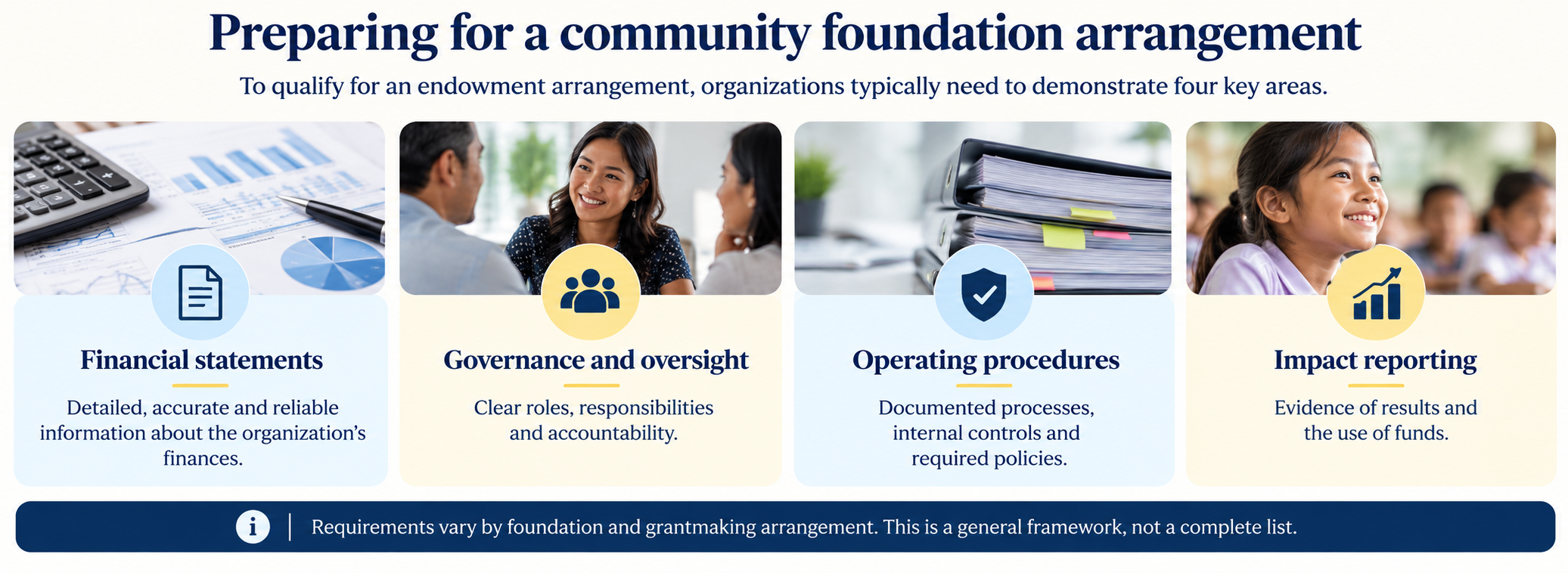
One of the questions we’re still examining is whether the orphanage could qualify for an endowment arrangement administered through a U.S. community foundation.
That means understanding the foundation’s requirements for international grants, financial reporting, governance and accountability.
We can’t assume that an organization will automatically meet those requirements simply because it has a compelling mission.
Nor should we expect its leadership to navigate the process alone.
We’re reviewing what’s already in place, where documentation needs improvement and which systems may need to be strengthened.
Some changes may be straightforward, others may require additional training, new procedures or administrative support.
A reporting system may look excellent on paper but be difficult for staff to maintain. A new procedure may meet an external requirement but need to be adapted to the way the organization operates.
That’s why we work through these questions with the people who would be responsible for implementing the changes.
We’re also asking whether a community foundation would provide guidance during this process or whether we would need to arrange that support separately.
These aren’t obstacles to be dismissed. They are part of preparing an organization to receive and manage long-term support responsibly.
And the knowledge doesn’t disappear if we ultimately choose another investment structure.
The financial systems, reporting practices and governance improvements will remain valuable.
Impact goes beyond the financial statements
As we examined the operating plan, we also discussed what would help the girls succeed educationally.
Teacher retention was one concern.
What would encourage teachers to stay longer? What additional training or support would help them? How could greater continuity improve the girls’ learning?
English-language instruction was another priority, particularly given government requirements.
Working with the orphanage’s leadership and educational staff, we explored different approaches to teaching English as a second language. The consultants helped demonstrate instructional methods and created opportunities to discuss what could work in the classroom.
University preparation was equally important.
Our ambition was to bring university acceptance as close to 100% as possible for girls pursuing that pathway.
But achieving that goal requires more than scholarships.
We needed to understand admission requirements, academic preparation, English-language proficiency, application procedures and the guidance students would need before leaving the orphanage.
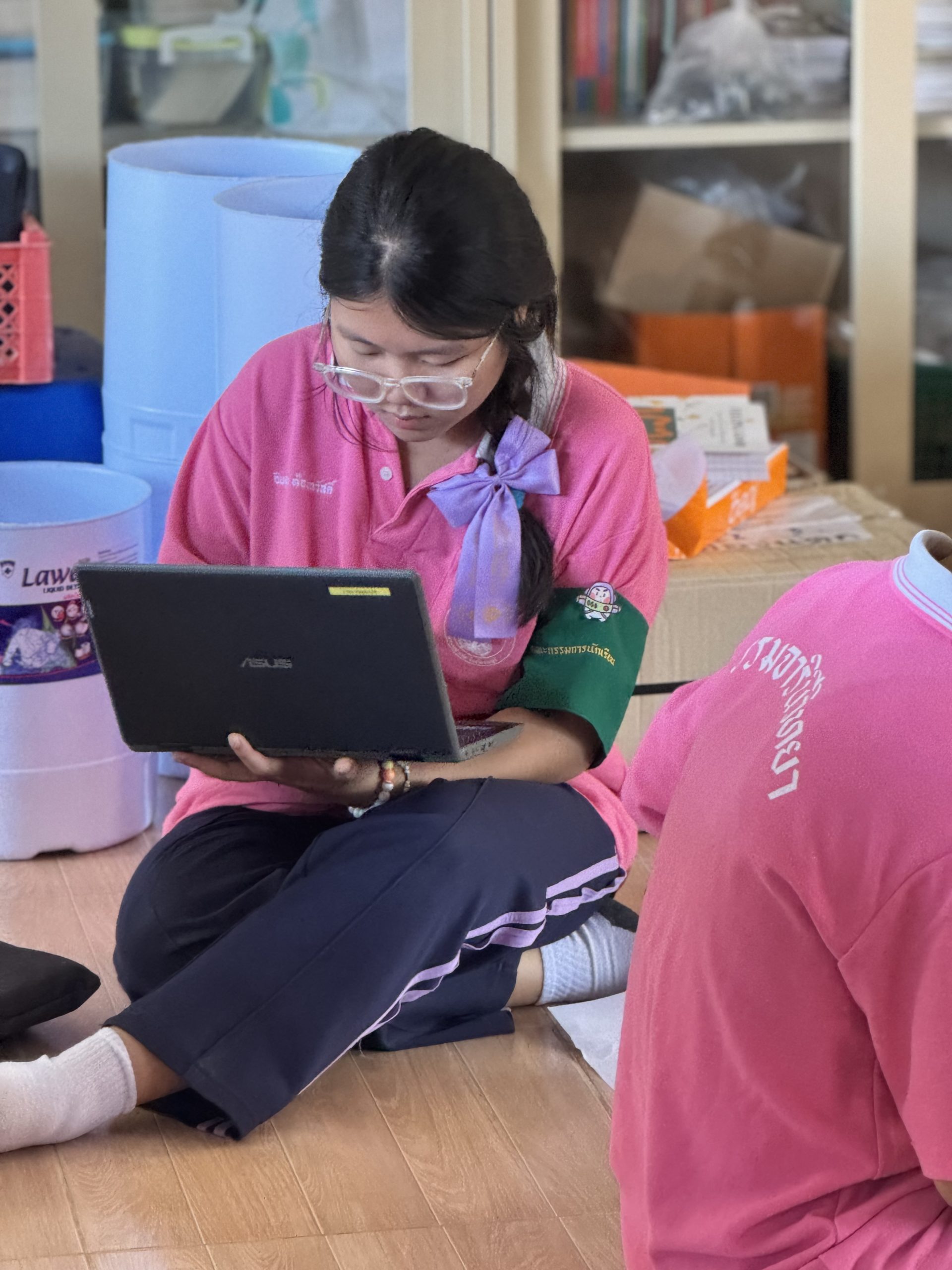
During one of my visits, we met with university representatives to explore potential relationships and educational pathways.
We also considered vocational education and opportunities with local employers, recognizing that the girls would have different interests and ambitions.
These discussions weren’t separate from our long-term financial planning. They helped us understand which recurring services needed protection and where additional donors could support new educational opportunities.
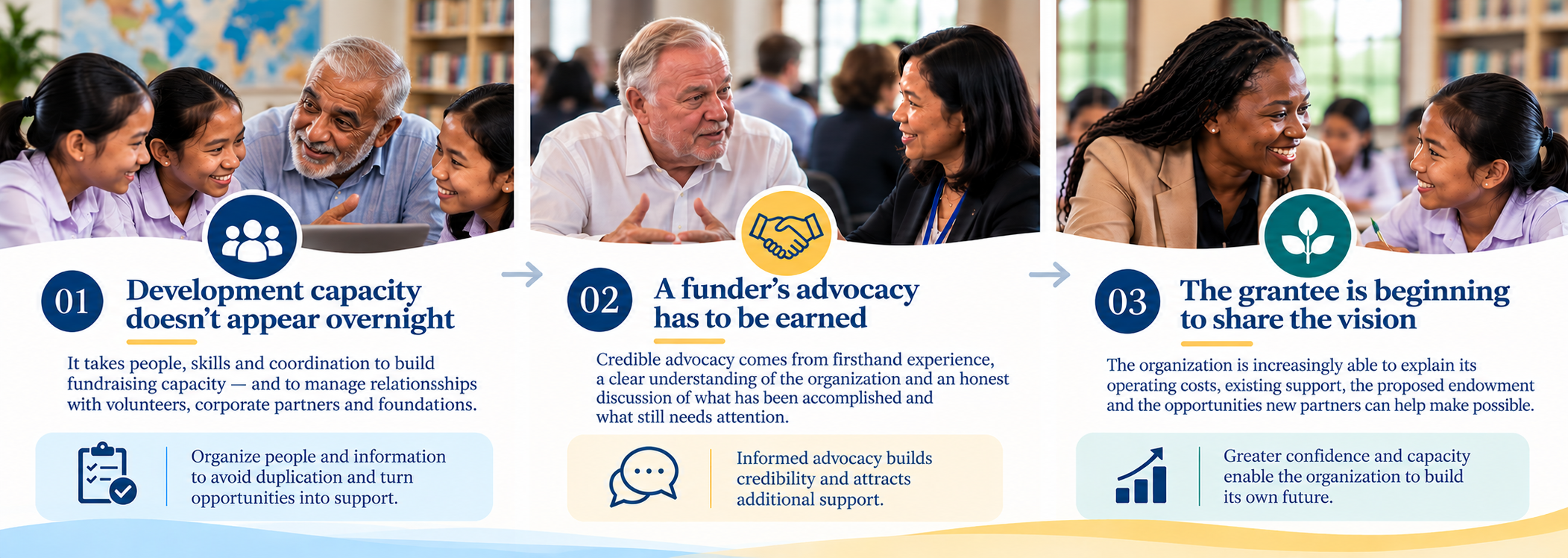
Development capacity doesn’t appear overnight
The orphanage had relationships with local supporters, but expanding its fundraising efforts required additional people, skills and coordination.
We worked with a group of volunteers who helped raise money, research funding opportunities and prepare grant applications. Some contributed their writing skills, while others brought relationships with prospective donors and corporations.
Because the orphanage’s leadership did not speak English, I also represented the organization at international conferences, introducing its work to family foundations, corporations and other potential partners.
That required more than explaining the mission. I needed to understand what the orphanage wanted to accomplish, communicate those priorities accurately and bring opportunities back for discussion before commitments were made.
Coordination was one of our greatest challenges.
With volunteers, local supporters, corporate partners and foundations involved, we needed to be careful not to approach the same donor twice, submit overlapping requests or secure funding for activities that another partner had already agreed to support.
We worked together to clarify responsibilities, share information and keep track of proposals, commitments and follow-up. It took regular communication, particularly when people were working in different countries and languages.
The volunteers were invaluable, but managing their contributions required time and attention from the orphanage’s leadership and our foundation.
Fundraising capacity isn’t simply about finding more donors. It’s about organizing the people, relationships and resources already available so that opportunities aren’t duplicated, commitments are fulfilled and the organization’s leadership remains in control.
The volunteers helped us reach funders we couldn’t have approached alone. But turning those introductions into financial support required coordination, clear responsibilities and consistent follow-through.
A funder’s advocacy has to be earned
When we introduce the orphanage to other supporters, our involvement carries weight.
But I don’t believe a funder’s endorsement should be based only on enthusiasm for the mission.
It should come from knowing the organization.
I’ve visited several times. We’ve jointly reviewed financial information, examined operating requirements, considered staffing challenges and explored opportunities with educational institutions and local businesses.
We’ve brought in consultants where additional expertise and communication could help. And we’ve worked through difficult questions rather than avoiding them.
That experience allows us to speak about the orphanage with greater understanding.
It doesn’t remove another donor’s responsibility to conduct its own due diligence. But it does mean we can explain not only why the work matters, but also what the organization has accomplished, what still needs attention and where additional support could make a difference.
Advocacy is more valuable when it’s informed by firsthand experience and undertaken with the partner’s knowledge and guidance.
The grantee is beginning to share the vision
One of the most encouraging developments is seeing the orphanage’s leadership take what we’re learning and begin discussing it with others.
The conversations are becoming more specific.
Rather than simply describing a need for donations, the organization can explain its operating costs, the contributions already provided by local corporations, the purpose of the proposed endowment and the educational opportunities that new partners might support.
The endowment isn’t funded. We haven’t selected the final investment structure. And there are still requirements to work through.
But the orphanage’s leadership is increasingly involved in explaining the model, considering new relationships and deciding how it wants to move forward.
For me, that’s one of the most important developments.
The purpose of co-creation isn’t to make an organization more dependent on its funder. It’s to strengthen its ability to make decisions, build relationships and pursue its own future.
The uphill journey is part of the investment
There’s still considerable work ahead.
We need to complete the financial planning, decide on the endowment structure, understand the requirements of potential administrators and continue building relationships with prospective supporters.
Some steps will be more difficult than others.
Financial systems take time to improve. New partnerships don’t always develop as expected. In-kind contributions can change, government funding can be reduced, and operating needs don’t stand still.
Sometimes our own assumptions need to change as we learn more about what works locally.
That’s why the frequent conversations, shared decisions and willingness to adjust have mattered so much.
We’re gaining a better understanding of the orphanage’s operations. Its leadership is developing stronger financial information and a clearer explanation of its long-term needs. Together, we’re identifying opportunities to improve educational outcomes and involve additional partners.
We’re still working through the challenges, and we’re both excited about what’s possible.
An endowment may take years to build. But the financial knowledge, relationships and organizational capacity developed along the way can begin strengthening the mission today.