
May 18, 2026
Have you ever wanted to join a group but wondered whether you would fit in? You might be excited about meeting people who share your interests, yet unsure how to enter the conversation. Perhaps you want advice you cannot comfortably ask for at work, or somewhere to go where people understand what matters to you.
Those hopes sit behind many decisions to join. If you lead a nonprofit or serve on its board, they are worth understanding before you design a membership offer.
Membership can start from either direction. Sometimes belonging comes first. You volunteer or attend an open gathering, get to know people, and later sign up for a paid workshop or membership. Other times, the transaction comes first. You pay for access to something useful, and the relationships you develop give you reasons to stay.
In my professional memberships, I’m drawn to people with similar interests and ideas that open possibilities I haven’t considered. The connections and useful feedback keep me coming back. Your members will have their own reasons. Understanding what draws them in is the beginning; understanding what makes them stay helps you build a community that can grow.
Give people a reason to return
People want to feel that someone notices them and welcomes their contribution. For some, your mission provides that first connection. They care about the issue and want to know that their opinions matter.
Others come for a particular benefit. An expert might help them understand a problem. A confidential peer group might give them somewhere to discuss a difficult decision. You need to provide what attracted them, then give them opportunities to become part of the conversation.
A community discussion gives people room to share what they know and hear another perspective. Time to talk after a workshop lets them connect the learning to their own lives. A comfortable place to sit encourages them to stay.
When people can help shape what happens next, they have another reason to return. Someone who contributes to a project wants to see how it develops. Someone who meets a person with relevant experience may discover they have someone to call between gatherings. The value begins to extend beyond what is on the calendar.
A membership fee can purchase access. Belonging develops through experience.
Give belonging somewhere to grow
I see an opportunity for nonprofits to offer what the sociologist Ray Oldenburg called the third place: somewhere beyond home and work where people can connect and enjoy one another’s company.
People do not always need a scheduled activity. Some come for a performance, then stay in the café with friends. Others drop in to read or take a quiet break. Getting comfortable in the space may come before becoming interested in membership.
Regular gatherings give relationships time to develop. A monthly evening program becomes something people can put on their calendars. A seasonal tradition gives them something to anticipate together. Over time, they recognize familiar faces and pick up conversations where they left off.
Someone arriving alone is still finding their way. The observation widely attributed to Maya Angelou captures what is at stake: “People will never forget how you made them feel.”
A volunteer who introduces you to another guest, or a staff member who takes time with your question, can make the room feel easier to enter. You leave remembering that someone noticed you. Coming back feels less daunting.
Those moments need support behind them. Staff and volunteers need training, time, and the authority to help. Hospitality belongs in the budget because it helps sustain the relationships membership depends on.
People also need room to contribute. Natalye B. Tate’s study of museums describes how volunteers at the C.H. Nash Museum became comfortable proposing projects and taking a greater role in its work. They could help shape the place they were returning to.
Let members extend the invitation
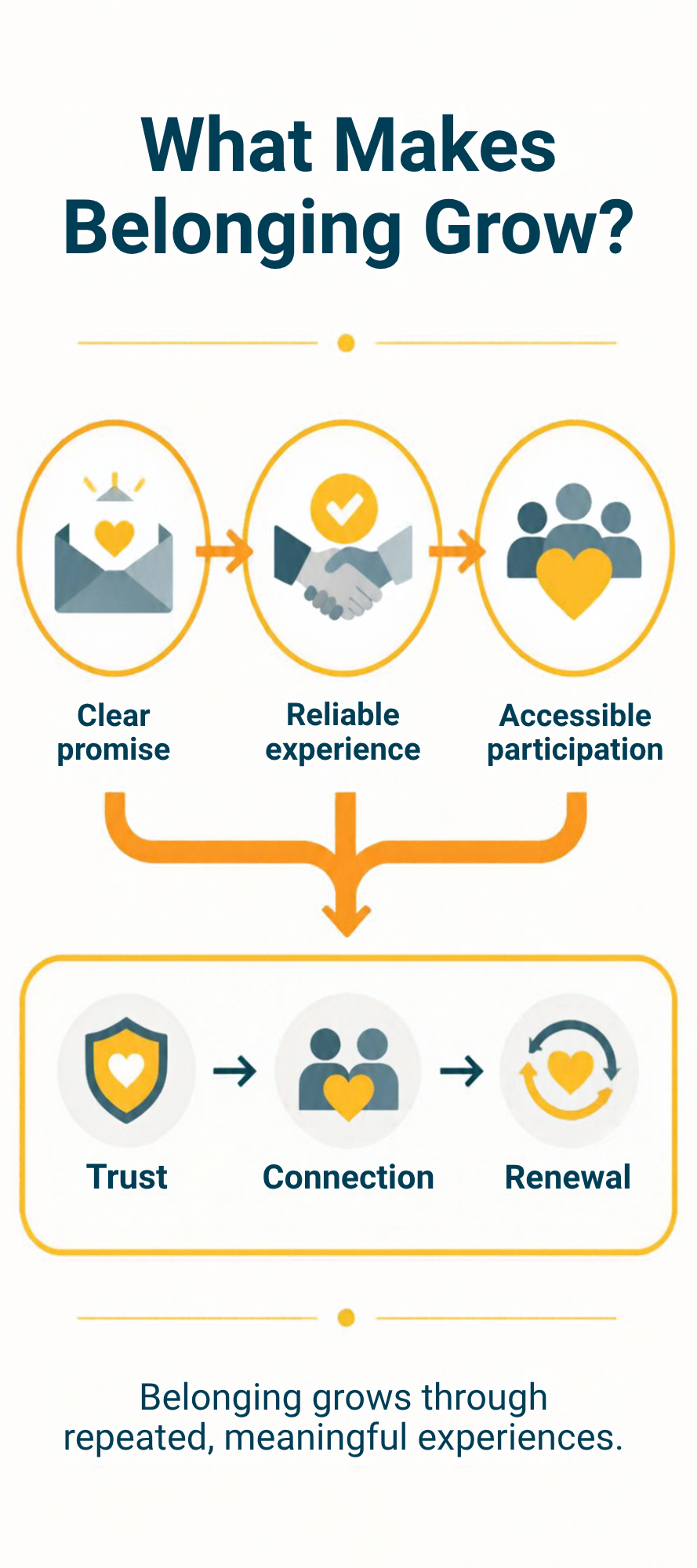
Eventually, membership can become something people would miss. They have friends to see, conversations to continue, and a contribution they want to make. That deeper connection is what I mean by a sticky membership.
It can also change how new people find you. A current member invites a colleague or brings a friend, giving that person someone to arrive with and a reason to feel comfortable. Word of mouth carries a personal recommendation: someone they trust believes this is worth their time.
Those relationships have financial implications. Renewals can provide more predictable income. Returning participants may buy additional workshops or event tickets. Member invitations may reduce recruitment costs.
These are possibilities to test, rather than income to assume. An invitation brings a new person in; you still need to give them their own reason to return.
Make membership help keep the lights on
When people keep coming back, you want to give that community a future. For a CEO or board member, that means understanding how it will serve the mission and pay the bills.
It helps to separate why someone joins from why someone pays. A member may want friendship or advice. An employer may pay because the learning helps its staff. A sponsor may value reaching a relevant audience and supporting work that matters locally. A donor may fund access for someone who cannot afford it.
Each needs a clear offer. Sponsors should understand the recognition and opportunities to connect they receive. Members need confidence that sponsorship adds to their community. Confidential discussions must remain confidential.
You might combine free membership with paid workshops and sponsorship, or offer flexible fees supported by donations. Whatever the mix, you need to understand the cost of supporting each member, including a share of overhead, and what income remains afterward. More members can mean more work before they mean more income.
Key performance indicators, or KPIs, help you judge whether growth is strengthening the organization. Compare first-year renewal rates with those of established members. Track how many newcomers arrive through member invitations and whether they stay. In a free model, repeat attendance and paid workshop participation may tell you more than enrollment alone.
The financial review needs to sit alongside those measures. Are renewals and repeat purchases covering the cost of the benefits? Is sponsorship dependable enough to support the commitments you are making? Your plan needs to account for funding or participation falling short.
Then talk to members and staff. Their answers help explain whether the relationships are deepening and whether your team can sustain the work. Together with the financial results, that gives you a basis for deciding what to grow and what needs to change.
An invitation brings someone through the door…. Belonging gives them a reason to stay.
Further reading
- Ray Oldenburg. The Great Good Place. Paragon House, 1989.
- Natalye B. Tate. “Museums as Third Places or What? Accessing the Social Without Reservations.” Museums & Social Issues, 7(2), 2012, pp. 269–283.
- “Dr. Maya Angelou’s 90th Birthday.” Caged Bird Legacy, April 4, 2018. The quotation appears there under Angelou’s name; its attribution is disputed.